The short answer
So the rating of the charger is not the first thing you choose. It follows from what your installation can already carry.
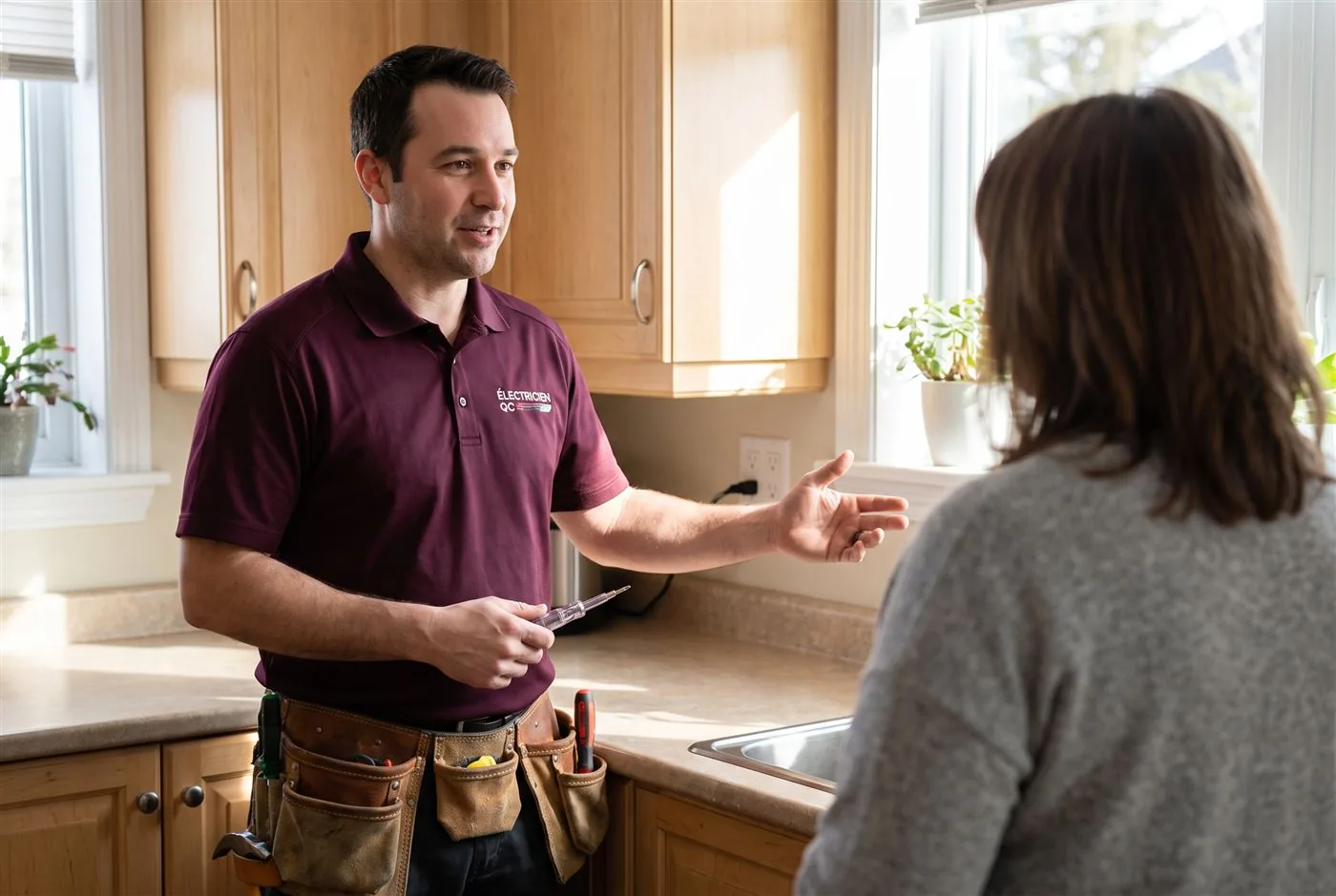
Marc-André has installed roughly 80 to 90 chargers in his career, 10 to 15 of them in the past year. The charger itself goes up in half a day. What changes from one project to the next is the panel and the cable run.
Why 40 amps and not 32
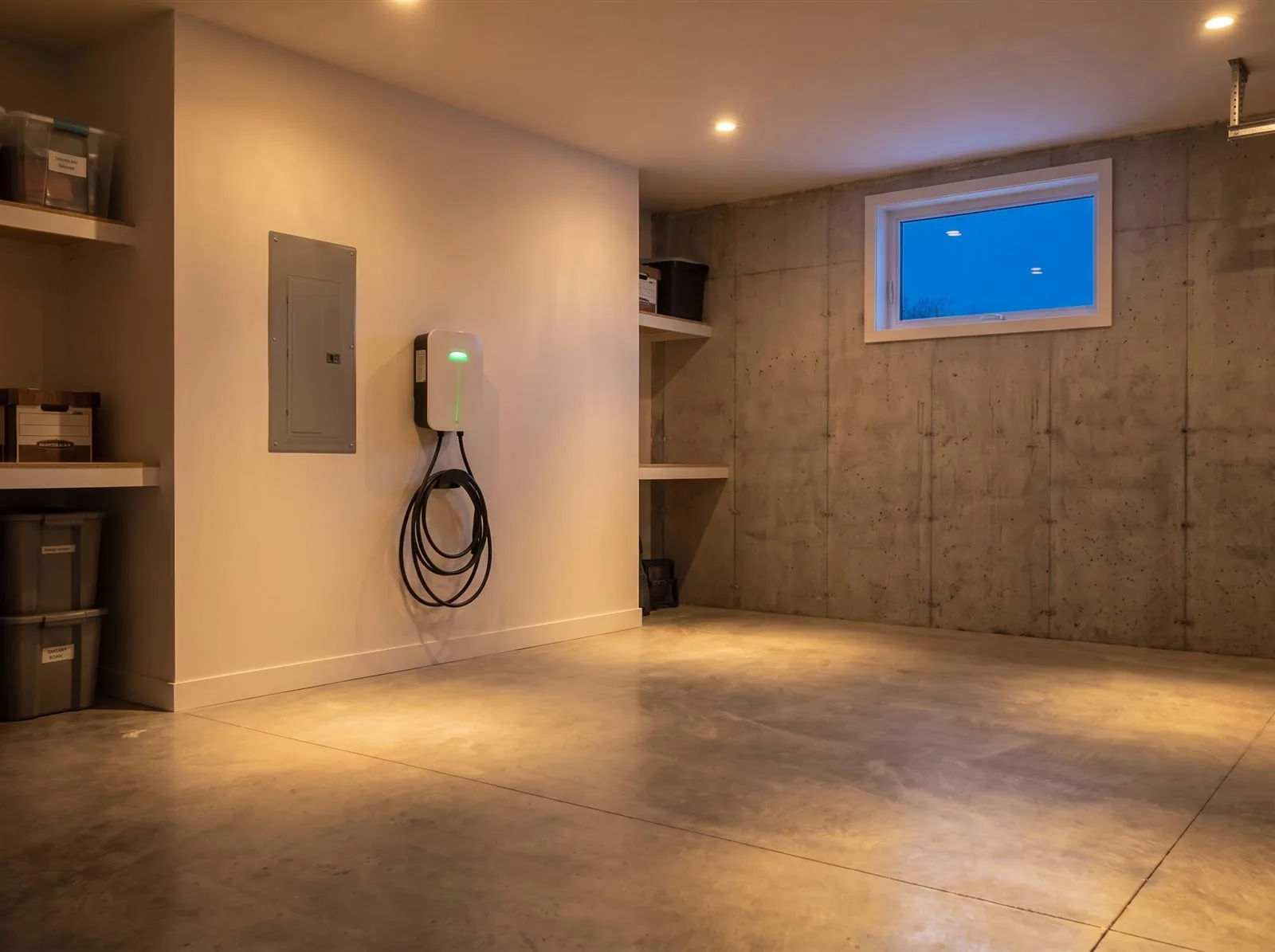
An EV charger is what the Code calls a continuous load: it draws current for hours without interruption. The Code requires sizing the breaker and the wire at 125% of that load. That is why a charger sold as a “40 A” model does not take up 40 amps in your panel, but 50.
- A charger set to 24 amps: a dedicated 30 amp circuit
- A charger set to 32 amps: a dedicated 40 amp circuit
- A charger set to 40 amps: a dedicated 50 amp circuit
- A charger set to 48 amps: a dedicated 60 amp circuit
What your electrical service can already take
Many homes in Montreal’s Southwest still have a 100 amp service, and in Verdun plenty of prewar plexes still do.
What counts is not the free space in the panel, but the load already connected to it. You can have six empty slots and no capacity available.
- An electric range: often 40 amps
- A dryer: 30 amps
- A water heater: 30 amps
- A heat pump or a central air conditioner: variable, often 30 to 40
- Electric heating, if there is any: the biggest load in the house
The calculation an electrician runs
The Code sets out a load calculation for a single family dwelling. It adds up the living area, the heating, the fixed appliances and the special loads, with demand factors.
That calculation decides, not an estimate by eye. It also explains why two neighbouring houses do not get the same answer: the one heated with gas keeps a margin the other has already spent.
- We record what is there: rating of the service, circuits and fixed appliances
- We apply the demand factors, because nothing ever runs all at once
- We add the charger at 125% of its rated current
- We compare with the rating of the service
Does the panel have to change before the charger
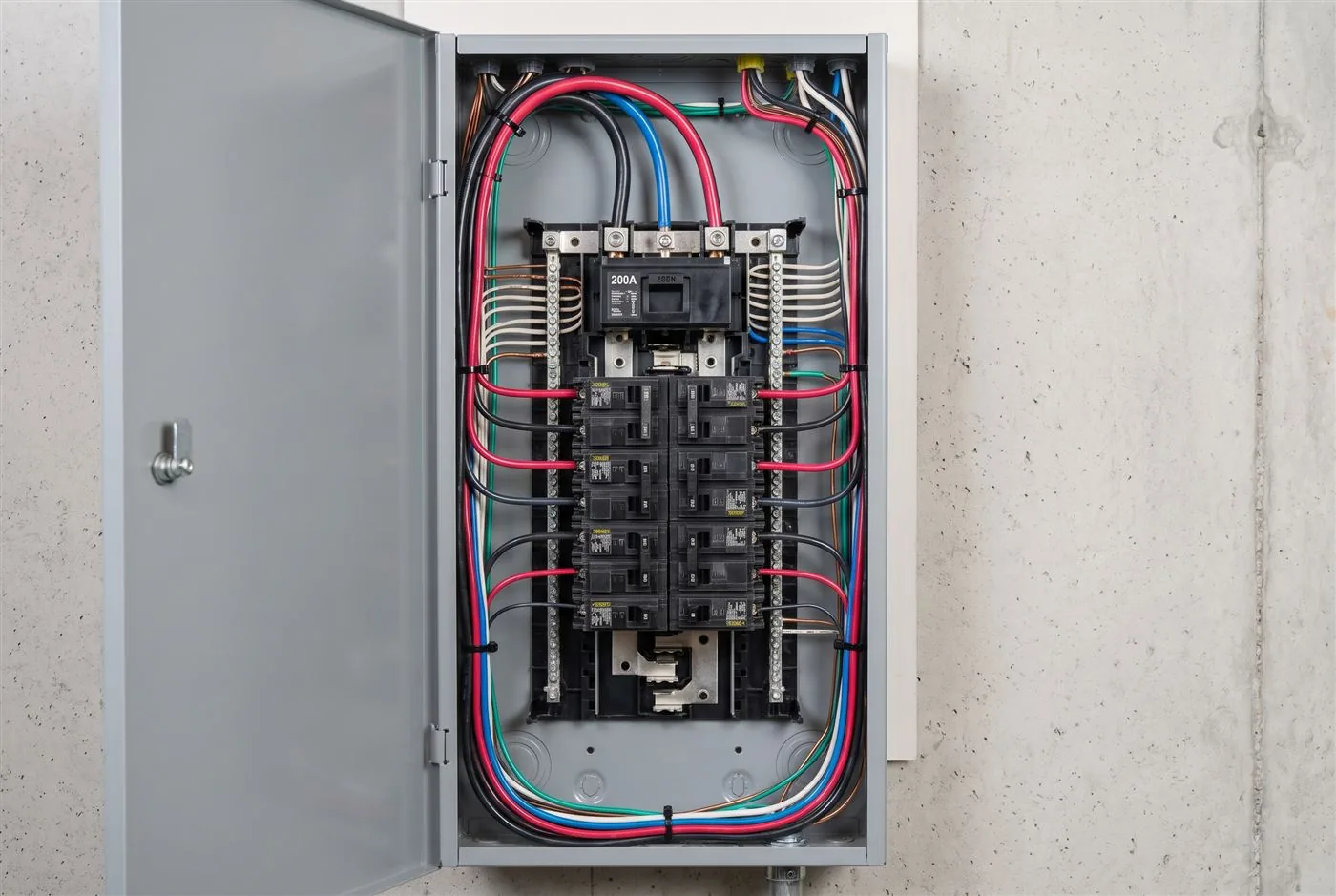
That is the first question we get, and two things answer it: is there room left in the panel, and is it strong enough for what is being added.
If it is already strong enough and still has slots, we leave it alone. If it is full, or if the calculation shows it is no longer strong enough, it has to be redone first. A panel has to match what it carries, never be overloaded.
On a 100 amp service that is already well loaded, adding a charger often tips the calculation. Upgrading to 200 amps then becomes the solution that lasts: it leaves room for a second charger, a hot tub or radiant floor heating.
Load management, the alternative to an upgrade
A charger does not need its full power at the same moment as the dryer, the range and the heating. A load management device measures what passes through the service and backs the charger off when the house needs the current.
The Code recognizes them, and in some cases they let a charger be added without touching the service. The trade-off: charging can slow down at peak hours. For someone who plugs in at night and leaves in the morning, it is almost never noticeable. With two electric vehicles, that is another conversation.
FLO, Wallbox or Tesla: which one suits you
We install three brands, and the choice follows your situation, never an exclusivity agreement. We hold none.
FLO, our first choice for a home in Québec
The one we install most often. Service and parts are here, and the equipment is built for the temperatures we get.
Wallbox, when the service is tight
The Canadian high end. Its load management is finer, and it is often what avoids an upgrade.
Tesla, if you already have one
We do not sell it, we install it at list price. It connects like any other level 2 charger.
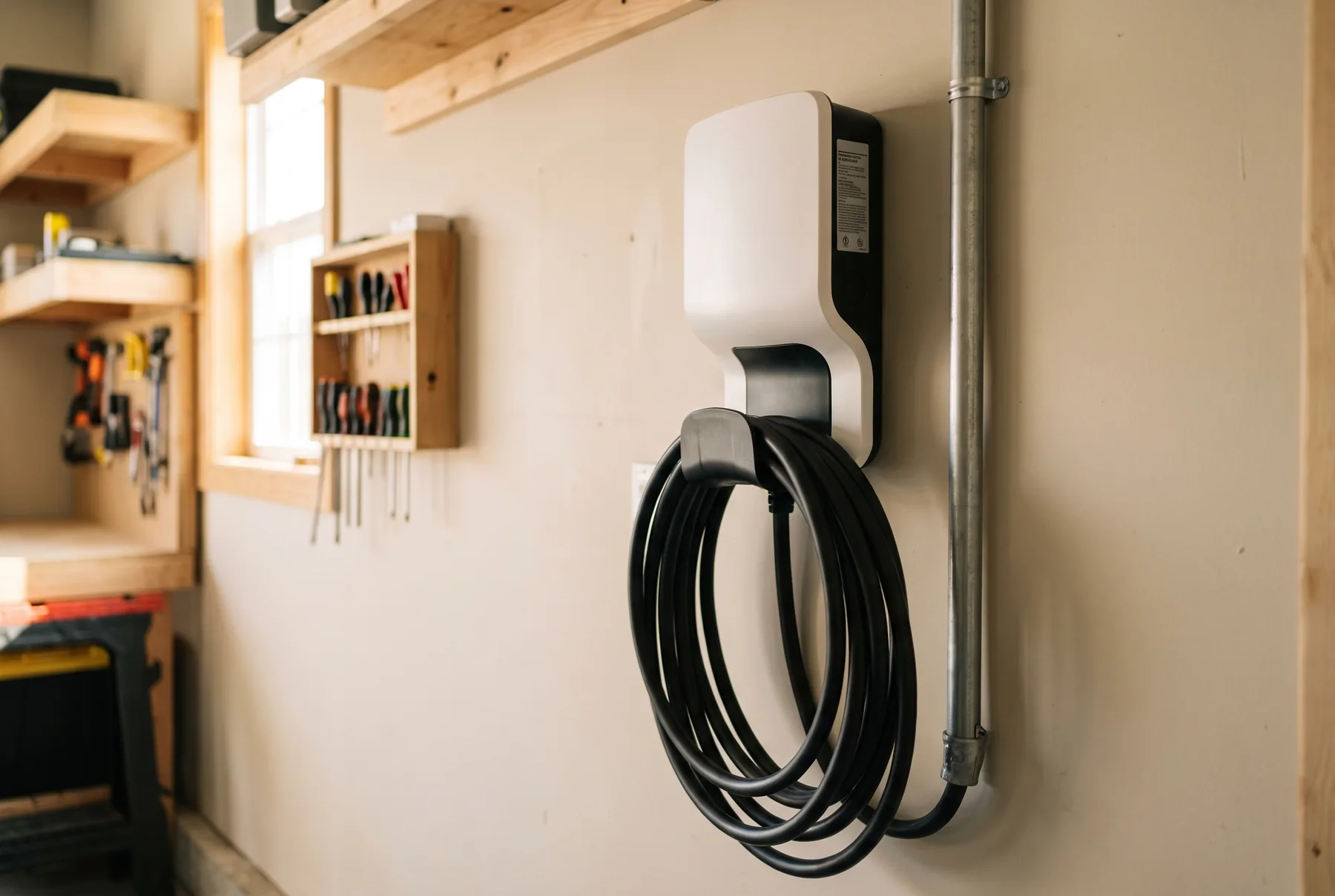
If you buy the charger yourself
Plenty of people order their charger online before calling us. We install those too, on one condition: it has to carry a certification recognized in Québec.
That is where some chargers bought abroad run into trouble. Without a recognized certification, it does not get connected. That is not a preference, it is compliance.
- The certification, to check before buying and not after delivery
- The eligible list of the program, if you plan to apply for the grant
- The connector, so that it matches your vehicle
- The maximum current: a 48 amp charger needs a service able to carry it
Where the charger goes, and why it changes the job
The charger goes where the vehicle parks, and the distance from the panel decides a good part of the work.
The attached garage
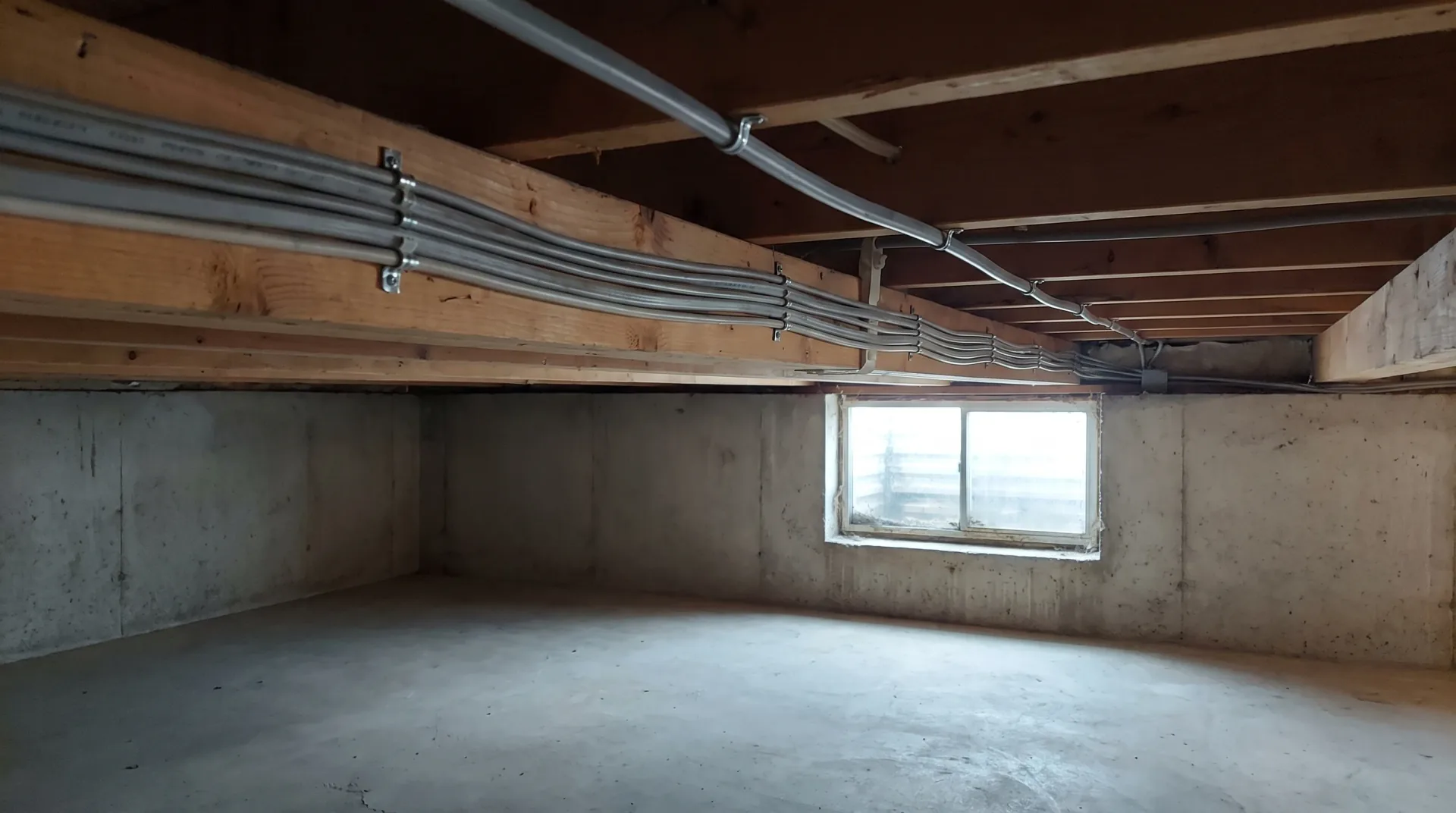
The simplest case. If the basement is finished, we have to find a route or open it up, and that is what changes the time on site.
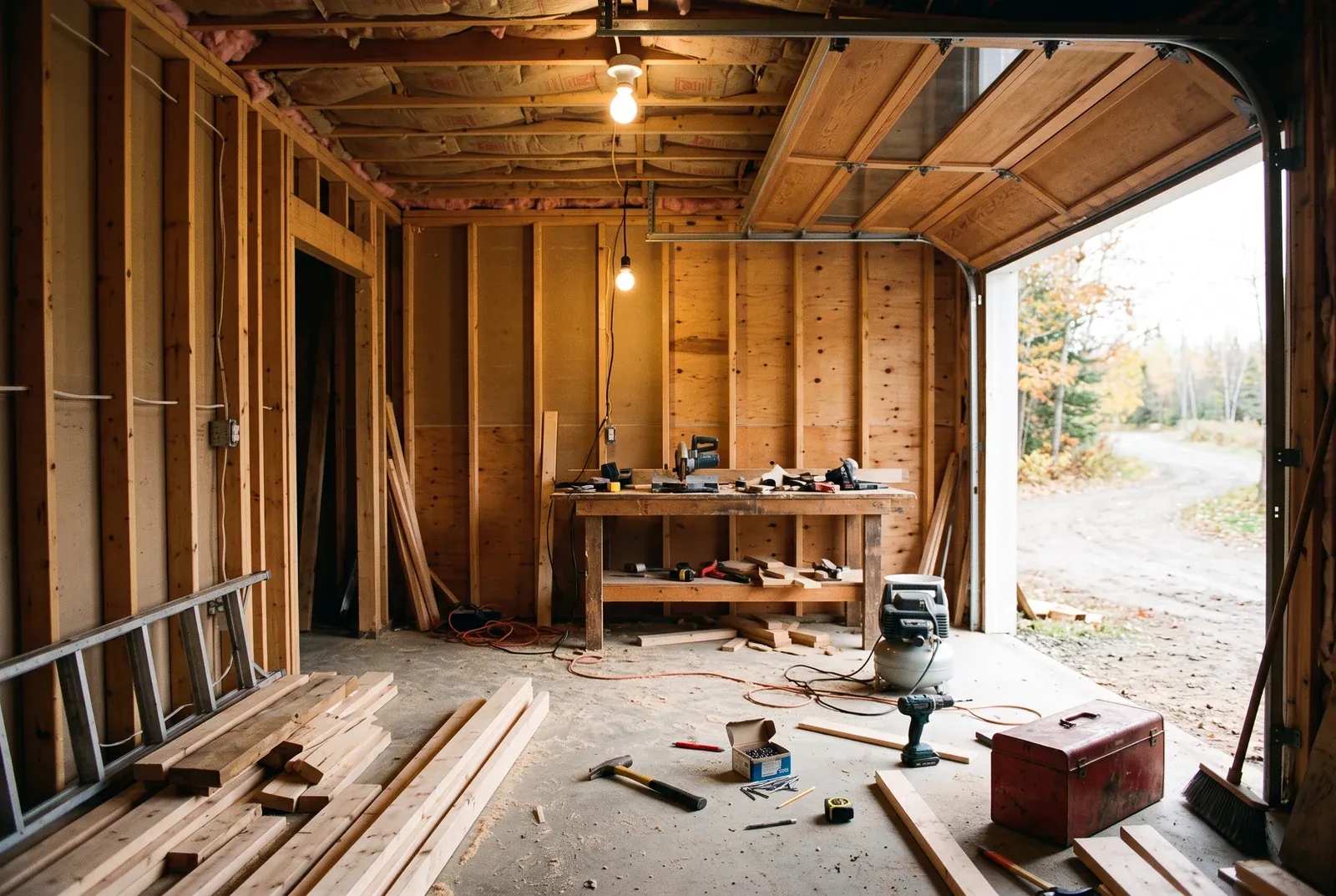
The detached garage
It has to be fed from the house. If a feed exists, we check that it can carry the charger. If not, one has to be run, and underground means a trench.
The outdoor parking spot
On an exterior wall, or on a post if no wall falls in the right place. The equipment has to be rated for outdoor use.
A charger in a plex, a triplex or a condo
In a plex or a triplex, each unit usually has its own meter. The charger connects to the panel of the unit concerned, and that person pays for the electricity they use. It saves the conversation about splitting a bill between neighbours.
What changes from one unit to the next is the cable route. A charger for the ground floor takes less work than one for the third floor, where the cable runs down the full height of the building.
And the same capacity question comes back: the panel of the unit has to be able to carry the charger. In an older Verdun plex, that is where the project gets decided.
What the job actually involves
A charger goes up in half a day. It is not the mounting that changes the project, it is what has to happen first. If the panel has to be redone, it becomes two jobs instead of one.
We assess on site
The rating of the service, the load already connected, the room in the panel, the cable route and the exact spot for the charger.
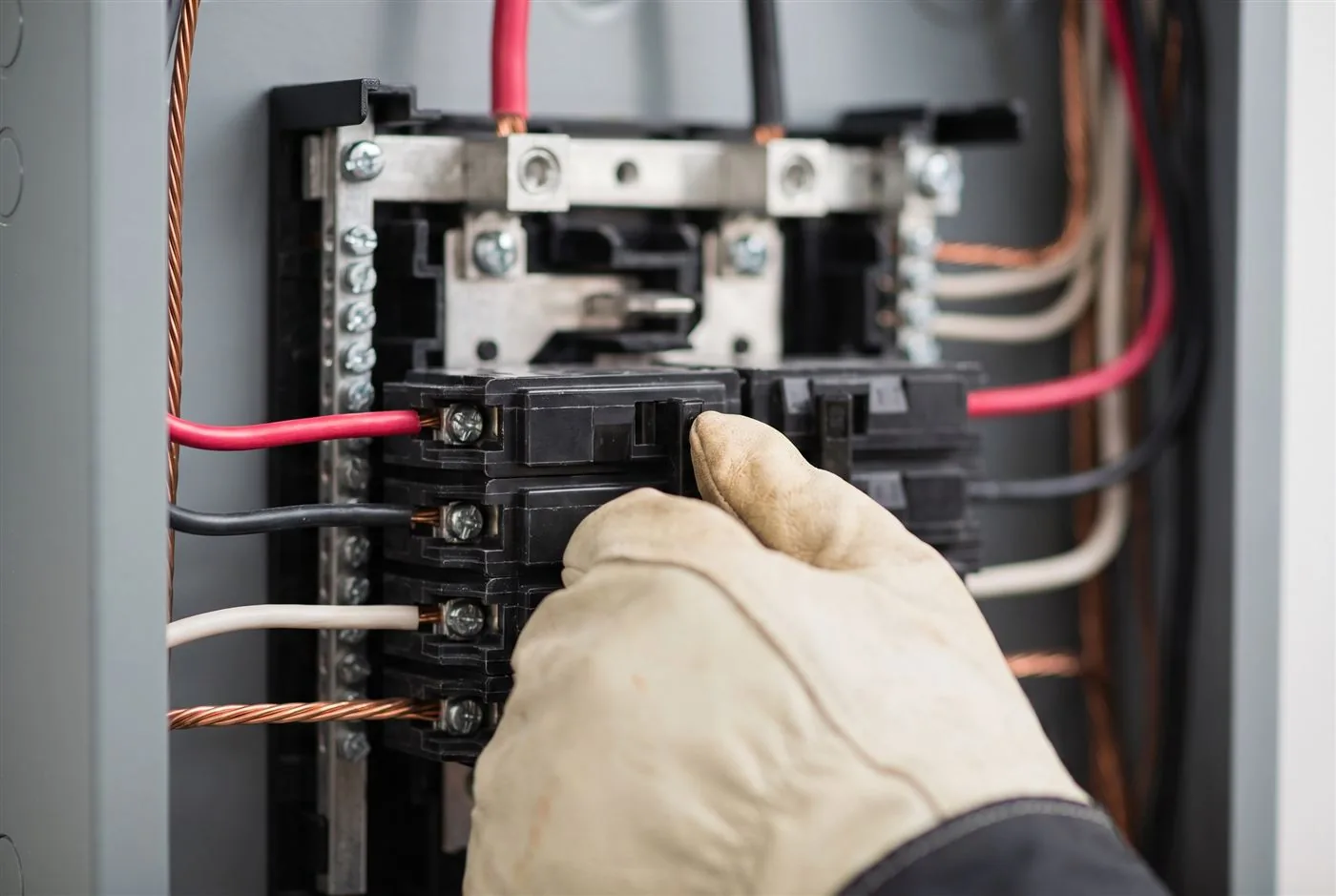
We add the dedicated circuit
A breaker that serves nothing but the charger, with wire of the matching size.
We run the cable
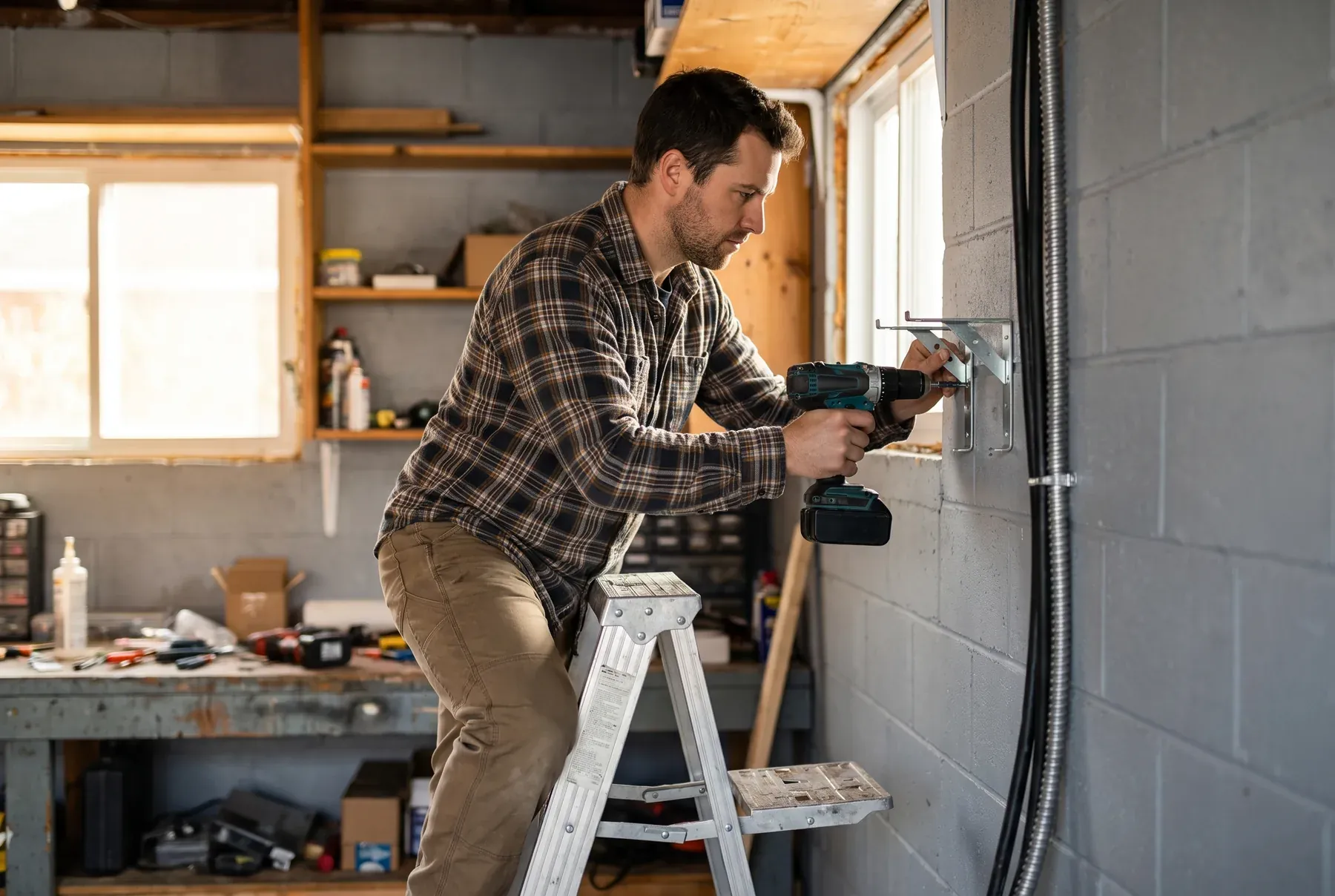
From the panel to the spot. That is the step that varies most, depending on the distance and the walls.
We mount it and commission it
The charger is fixed, connected, then tested with your vehicle before we leave.
Écorecharge: what the grant actually covers
This is the most common misunderstanding about home EV chargers in Québec. The Écorecharge program of the Government of Québec pays $600 toward the purchase of a home charging station. That amount covers the charger itself: the installation is not covered.
It is paid as a reimbursement, under specific conditions.
- Own an electric vehicle at the time the application is filed
- A level 2 charger, so 208 or 240 volts, installed to run that way
- Bought from a Canadian retailer, at a price before taxes above $600
- Proof that the charger was in fact installed
What changes the size of the job
Two houses on the same street do not call for the same job.
- The distance between the panel and the charger
- The walls to go through, especially if they are finished
- Outdoors: equipment rated for it and a weathertight connection
- A detached garage, and a trench if the feed has to go underground
- The state of the panel: fine as is, to be redone, or to be upgraded
- The floor the unit is on, in a plex
What to send us to get an answer
Four things are enough to size up the project remotely.
- The model of your vehicle, or of the charger if it is already chosen
- A photo of the electrical panel with the door open, with the circuit labels readable
- Where the vehicle parks, and the rough distance to the panel
- Whether it is a house, a plex or a condo, and which floor the unit is on

Master electrician, RBQ licence 5855-0849-01 and CMEQ member 17468. About ten years in the trade across Montreal’s Southwest and the South Shore.
Who does the work